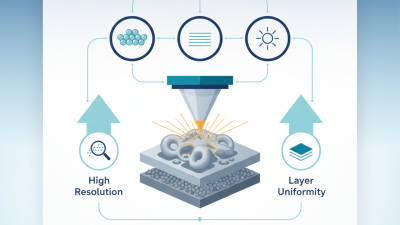
Metal Powder Bed Fusion is moving from specialist production into wider industrial purchasing decisions. Global buyers now compare more than machine prices. They examine powder quality, laser or electron-beam systems, build volume, productivity, software, service support, and qualification evidence.
Terry Wohlers, a recognized additive manufacturing consultant, has said, “Additive manufacturing is not a one-size-fits-all solution.” This warning remains practical. A medical implant may require fine laser control and strict process monitoring. A large aerospace component may benefit from electron beam processing, reduced residual stress, and elevated build temperatures. Different parts demand different answers.
This guide reviews the 2026 Metal Powder Bed Fusion types most relevant to international buyers. It focuses on Laser Powder Bed Fusion and Electron Beam Powder Bed Fusion, while considering material compatibility, surface finish, throughput, energy use, and post-processing needs. Stainless steel, titanium, nickel alloys, and aluminum behave differently inside the build chamber. Powder storage matters too. Moisture can quietly damage consistency.
Real purchasing decisions are rarely perfect.
Supplier claims may sound impressive, yet independent test data can be limited. Regional service capacity may also matter more than a small productivity advantage. Buyers should question total ownership costs, operator training, validation support, spare parts, and long-term software access. The cheapest platform may become expensive after installation.
Technology selection still involves uncertainty. Therefore, this overview compares practical strengths and limitations, not marketing promises. It is designed to help engineers, manufacturers, and sourcing teams choose a Metal Powder Bed Fusion route with clearer expectations and stronger technical judgment.
2026 Top Metal Powder Bed Fusion Types for Global Buyers
Metal Powder Bed Fusion: Definition, Process, and Core Principles
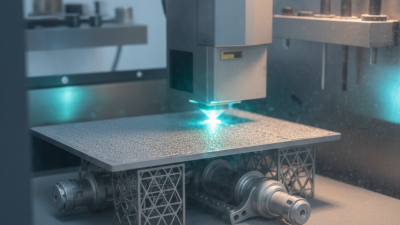
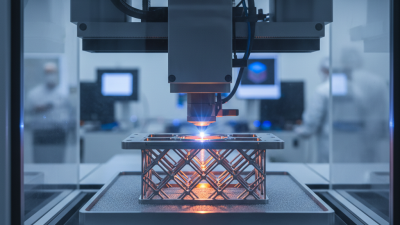
Metal Powder Bed Fusion (PBF) builds metal parts from a digital 3D model. ASTM/ISO 52900 describes additive manufacturing as joining material layer by layer. In PBF, a thin powder layer covers the build platform. A laser or electron beam selectively melts, or sinters, defined areas. The platform then moves downward, and a recoater spreads fresh powder. This cycle repeats until the component is complete.
The main metal PBF types are Laser Powder Bed Fusion and Electron Beam Powder Bed Fusion. Laser systems commonly operate inside an inert-gas chamber, while electron-beam systems typically require vacuum conditions. Layer thickness often ranges from about 20 to 100 micrometers, depending on material and machine settings. Small features may look precise. They still require careful thermal control.
The core principle is controlled energy absorption. Power, scan speed, hatch spacing, and layer thickness influence melt-pool stability. Poor settings can create porosity, distortion, or weak bonding. A perfect-looking surface is not proof of internal quality. That matters.
The 2024 Wohlers Report valued the global additive manufacturing industry at approximately 20.0 billion dollars in 2023, with 2.8% annual growth. This figure covers all additive technologies, not metal PBF alone. Buyers should therefore avoid treating broad market data as direct proof of PBF performance. Production trials, density testing, dimensional inspection, and powder reuse studies remain necessary. Real factories are less predictable than brochures.
Metal Powder Bed Fusion: Definition, Process, and Core Principles
The chart compares representative layer-thickness windows used in metal powder bed fusion. Laser-based systems generally support finer layers and detailed features, while electron-beam systems commonly use thicker layers and operate in a heated build environment. Actual values vary according to alloy, powder size distribution, machine configuration, and qualified process parameters.
Key Metal Powder Bed Fusion Technologies Available in 2026
Metal powder bed fusion has become a practical production method, not merely a prototype process. The 2024 Wohlers Report valued the global additive manufacturing industry at approximately $20.0 billion in 2023, with metal applications driving demand for aerospace, medical, energy, and industrial components. Market estimates differ, but the direction is clear.
Laser powder bed fusion remains the most widely specified option. It uses focused lasers to melt thin powder layers, producing detailed channels, lattice structures, and complex cooling paths. Multi-laser systems can improve throughput, although heat distortion and powder spreading still require careful process control. Electron beam powder bed fusion offers deeper thermal penetration and lower residual stress in suitable alloys. It can be useful for larger parts, but surface finish is often rougher.
Binder jetting is sometimes grouped with powder-bed technologies, yet it does not melt powder during printing. A binder forms the shape, followed by debinding and sintering. This approach may support higher batch productivity, but shrinkage must be measured and compensated. ASTM and ISO 52900 provide the common terminology needed for reliable technology comparisons.
Grand View Research estimated the metal 3D printing market at about $4.9 billion in 2023. Still, forecasts vary widely because companies classify equipment, materials, and services differently. Buyers should test real powder lots, inspect porosity, and compare finished-part costs. No process wins every time.
For global buyers in 2026, metal powder bed fusion selection begins with material compatibility, not machine speed. Laser-based systems can process stainless steel, tool steel, aluminum, titanium, nickel alloys, cobalt-chromium, and selected copper grades. Each powder needs a controlled energy window. Particle size, flowability, reflectivity, and oxygen content affect melting stability. A powder that feeds well may still produce weak edges. Small details matter.
Electron-beam systems favor electrically conductive alloys and operate in a heated powder bed. Titanium and cobalt-chromium are common choices, while nickel alloys may suit demanding thermal applications. The warmer chamber can reduce residual stress and support larger parts. However, surface texture is often rougher, and fine features may need post-processing. Laser systems usually provide sharper detail, but highly reflective copper remains challenging without careful parameter development. Compatibility is never automatic. Validate it with density tests, tensile coupons, and inspection data.
Buyers should match material to service conditions, not only a published alloy list. A medical component may require traceable powder reuse limits and strict contamination control. An aerospace bracket may need fatigue data, heat treatment, and non-destructive inspection. Recycled powder can change chemistry gradually. That risk is easy to underestimate. Repeated handling may reduce consistency between production batches. Regional supply, certification documents, and operator training also influence real availability. A perfect compatibility chart does not exist; process evidence should decide the purchase.
| Powder Bed Fusion Type | Energy Source | Typical Powder Materials | Common Powder Size Range | Processing Atmosphere | Material Compatibility | Typical Strengths | Key Limitations | Typical Application Areas | Buyer Considerations |
|---|---|---|---|---|---|---|---|---|---|
| Laser Powder Bed Fusion (LPBF) | Infrared or near-infrared laser, commonly using fiber-laser systems | Aluminum alloys, stainless steels, tool steels, maraging steels, nickel-based superalloys, cobalt-chromium alloys, titanium alloys, copper alloys, and selected precious-metal alloys | Typically approximately 15–63 µm, depending on the machine, layer thickness, and powder specification | Usually argon or nitrogen; oxygen concentration is controlled to reduce oxidation and support process consistency | Broadest material selection among commercially established metal PBF processes. Best compatibility is generally achieved with spherical, flowable, low-contamination powders having controlled particle-size distribution | High dimensional detail, fine features, good surface resolution, broad alloy availability, and suitability for complex internal channels | Residual stress and distortion may require support structures and heat treatment. Build rates can be limited for large parts, and surface roughness is higher than machined surfaces | Aerospace components, medical implants, industrial tooling, lightweight structures, heat exchangers, and customized production parts | Confirm laser absorptivity, powder reuse policy, oxygen-control capability, support-removal requirements, post-processing route, and qualification data for the target alloy |
| Multi-Laser Powder Bed Fusion | Multiple infrared or near-infrared lasers operating across one powder bed | Primarily the same alloy families used in LPBF, including aluminum, stainless steel, nickel-based, titanium, cobalt-chromium, copper, and tool-steel powders | Typically approximately 15–63 µm, with the usable range determined by the process qualification and recoating system | Usually argon or nitrogen with controlled oxygen levels | Compatible with many LPBF alloys, provided that melt-pool interaction, laser overlap, thermal uniformity, and parameter consistency are validated | Higher productivity potential, better scalability for larger build areas, and improved production economics for repeated batch manufacturing | More complex calibration, laser-to-laser uniformity requirements, thermal-management challenges, and potentially more demanding process qualification | Serial aerospace production, automotive components, energy-sector parts, production tooling, and high-volume industrial manufacturing | Evaluate laser-field uniformity, synchronization, recoater performance, build-area productivity, powder management, and data for multi-laser qualification |
| Electron Beam Powder Bed Fusion (EB-PBF) | Focused electron beam generated under vacuum | Titanium and titanium alloys, cobalt-chromium alloys, nickel-based alloys, and selected high-temperature metallic materials | Often approximately 45–106 µm, although the required range varies by equipment and powder specification | Vacuum during the build; the powder bed is commonly preheated to reduce thermal gradients | Particularly compatible with reactive and high-temperature alloys, including titanium alloys that benefit from vacuum processing and elevated bed temperature | Reduced oxidation risk, lower residual-stress tendency than many laser processes, high build temperatures, and strong suitability for thicker sections and complex titanium parts | Coarser surface finish and lower small-feature resolution than fine-powder LPBF. Vacuum operation, powder handling, and finishing requirements can increase system complexity | Aerospace structural parts, orthopedic implants, large titanium components, and high-temperature engineering applications | Check vacuum requirements, powder charging behavior, preheat capability, allowable part size, surface-finishing method, and the availability of qualified material parameters |
| High-Temperature Laser Powder Bed Fusion | Laser energy with a heated build chamber or elevated substrate temperature | Nickel-based superalloys, tool steels, refractory or difficult-to-weld alloys, titanium alloys, and selected copper-based materials | Typically approximately 15–63 µm, subject to the alloy, layer thickness, and recoating configuration | Usually argon or nitrogen; heated chambers may also use controlled inert-gas circulation | Designed for alloys that are susceptible to cracking or high residual stress when processed at lower substrate temperatures | Improved thermal control, reduced thermal gradients, and potential reduction of cracking and distortion in demanding alloys | Higher equipment cost, longer warm-up and cool-down cycles, more demanding thermal management, and stricter operating procedures | Turbine and energy components, hot-section tooling, high-strength tooling steels, and research or development of challenging alloys | Verify chamber-temperature uniformity, thermal-cycle control, alloy-specific cracking data, build-plate requirements, and operator safety procedures |
| Selective Heat Sintering for Metal Powders | Thermal printhead or localized heat source, depending on the process design | Specialized metal powders or powder systems designed for sintering, often requiring a separate debinding and sintering stage | Commonly fine to medium powder grades; the exact specification is highly process-dependent | Inert or controlled atmosphere during thermal treatment; furnace conditions are critical after printing | More limited than direct metal melting processes. Compatibility depends on binder or thermal-system chemistry, powder sinterability, shrinkage behavior, and furnace capability | Potentially lower printing temperatures, reduced thermal stress during shaping, and suitability for certain geometries and batch-production workflows | Dimensional shrinkage, density variation, debinding complexity, and dependence on a carefully controlled furnace cycle | Small components, development work, selected industrial parts, and applications where indirect processing is acceptable | Confirm green-part handling strength, shrinkage compensation, final density, furnace capacity, debinding emissions, and dimensional-tolerance data |
| Cold Metal Powder Bed Fusion with Post-Sintering | Mechanical or low-temperature deposition followed by furnace sintering | Metal powders blended with temporary binders or processing additives, including selected stainless steels, tool steels, and other sinterable alloys | Often fine to medium powder grades selected for flowability, packing density, and sintering response | Controlled atmosphere is generally most important during debinding and sintering rather than during powder deposition | Compatible only with powder systems that provide predictable binder removal, controlled shrinkage, and adequate final densification | Lower thermal load during shaping, potentially simpler deposition equipment, and suitability for parts that can tolerate post-sintering shrinkage | Lower as-built strength, substantial post-processing dependence, shrinkage-related tolerance limitations, and generally lower final density than fully melted PBF | Prototyping, small metal components, educational or development environments, and selected low-to-medium performance applications | Assess final density, sintering shrinkage, binder removal, furnace atmosphere, support strategy, and the required dimensional-accuracy class |
| Metal Binder Jetting | Liquid binder selectively deposited onto a powder bed; densification occurs during debinding and sintering | Stainless steels, tool steels, nickel-based alloys, copper-based materials, and other powders with established debinding and sintering profiles | Often approximately 10–50 µm, with the selected range balancing powder flow, print resolution, packing density, and sintering behavior | Printing may be performed in ambient or controlled conditions; debinding and sintering require carefully controlled furnace atmospheres | Good compatibility with sinterable metal powders, but final performance depends strongly on binder chemistry, furnace cycle, shrinkage control, and powder packing | High printing throughput, no laser-induced residual stress during printing, and potential for efficient batch production of smaller parts | Parts require debinding and sintering; shrinkage, distortion, density gradients, and furnace capacity must be managed carefully | Automotive components, consumer and industrial hardware, complex small parts, and medium-to-high-volume production | Compare green-part strength, sintering shrinkage, achievable density, furnace loading, powder recycling, binder removal, and production yield |
| Laser-Based Powder Bed Sintering of Metals | Laser selectively heats metal powder below or near the melting range, depending on the process | Specialized metal powders, metal-polymer blends, or partially sinterable alloy systems; material availability is narrower than for direct LPBF | Typically fine powder grades selected for controlled thermal bonding and layer formation | Usually inert gas, with atmosphere requirements determined by the powder chemistry and thermal cycle | Suitable only where the powder system can achieve adequate interparticle bonding and the resulting part properties meet the intended application | Lower thermal input than full melting, potentially reduced distortion, and compatibility with selected indirect-metal workflows | Lower density and mechanical strength than fully melted parts in many cases, with possible requirements for infiltration, sintering, or additional densification | Concept models, functional prototypes, low-load parts, and material-development programs | Request verified density, tensile properties, dimensional shrinkage, post-processing requirements, and application-specific qualification data |

Note: Powder-size ranges, atmosphere requirements, achievable density, layer thickness, and material compatibility are process-dependent. Global buyers should confirm the latest machine-specific material parameters, powder certificates, reuse limits, and qualification standards before procurement.
Laser powder bed fusion remains the most versatile metal option for complex aerospace, medical, and energy parts. Its thin layers create fine detail and strong dimensional control. However, laser systems often require high powder costs, inert gas, and careful thermal management. Wohlers Report 2024 valued the global additive manufacturing industry at $20.035 billion in 2023, growing 13.5% year over year. That expansion increases buyer pressure for measurable productivity, not impressive demonstrations.
Electron beam powder bed fusion can deliver high build temperatures and reduced residual stress. It suits larger, heat-sensitive components, but surface finish usually needs more post-processing. Multi-laser configurations can raise output, although productivity does not scale perfectly with laser count. Binder jetting may reduce support structures and offer high batch potential, but sintering shrinkage demands disciplined process validation. Real factory results vary widely. Sometimes, the cheaper machine costs more during qualification.
Tips: Compare cost per qualified part, not machine price. Request powder-reuse evidence, build-rate data, and energy figures from controlled tests. Review dimensional inspection records. Match the process to wall thickness, alloy behavior, tolerance, and annual volume. AMPOWER and other 2024 industry analyses report continued investment in industrial metal additive systems, yet they also highlight qualification and post-processing as major cost barriers. Buyers should budget for heat treatment, machining, powder handling, and operator training from day one.
Choosing a powder bed fusion system in 2026 starts with the part, not the machine brochure. Review alloy requirements, wall thickness, overhangs, batch size, and surface finish. Laser-based systems suit many alloys and detailed geometries. Electron-beam systems can reduce residual stress in suitable metals. That difference matters. Ask for sample builds using your powder, not generic test coupons.
A reliable evaluation includes powder reuse rules, oxygen control, calibration records, and operator training. Request build logs, dimensional data, and defect images from comparable production jobs. Check chamber size against your largest realistic part, leaving room for supports and thermal spread. Larger is not always better. It may increase powder consumption, cycle time, and inspection effort. For international purchasing, confirm electrical standards, technical documents, service response, spare-part access, and local safety obligations.
Cost models should include sieving, inert gas, post-processing, maintenance, and failed builds. A low purchase price can hide expensive downtime. I have seen teams overvalue maximum power and undervalue repeatability. That is an easy mistake. Ask whether qualified process support continues after installation, with traceable records and realistic acceptance criteria. One successful demonstration proves little. Run multiple builds, inspect critical features, and compare results across operators and powder lots. Set acceptance criteria before issuing the purchase order.