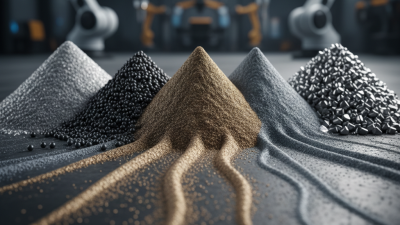
Top 10 Uses of Metallic Powders in Industry Today?
In today's manufacturing landscape, the use of Metallic Powders has gained tremendous importance. The market for these powders is projected to reach USD 8.2 billion by 2027, according to a recent industry report. These versatile materials are integral to various applications, from additive manufacturing to automotive components.
Dr. Emily Stokes, a renowned expert in the field, states, "Metallic Powders are reshaping the future of production." This statement captures the essence of how these materials enhance efficiency and quality in production processes. Industries are increasingly relying on them for their ability to create complex shapes with minimal waste. This is particularly crucial as manufacturers strive for sustainability.
Despite their benefits, challenges remain. Quality control issues and the need for innovative processing techniques continue to be focal points in the industry. As Dr. Stokes notes, addressing these challenges is vital for harnessing the full potential of Metallic Powders. Each step towards improvement enhances their reliability and application scope, ensuring a more resilient future for industrial manufacturing.

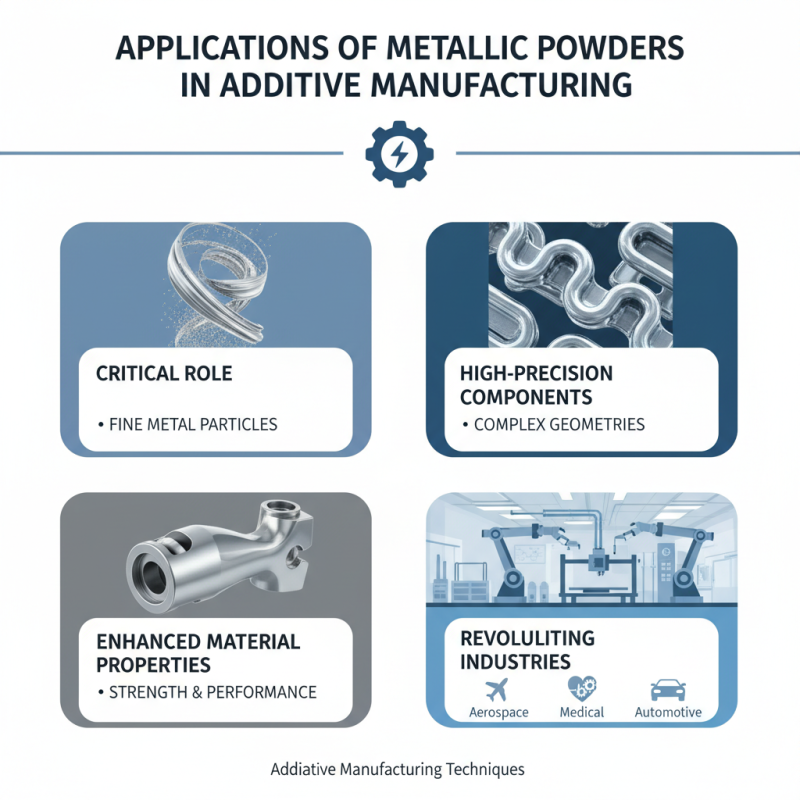
Applications of Metallic Powders in Additive Manufacturing Techniques
Metallic powders play a critical role in additive manufacturing, revolutionizing various industries. These fine metal particles are essential for creating high-precision components. Their use improves the mechanical properties of finished parts, enhancing strength and performance. This approach allows for complex geometries that traditional manufacturing techniques cannot achieve.
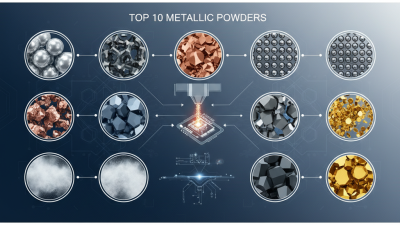
Metallic powders are made from diverse metals like titanium and stainless steel. Each type serves specific purposes in different applications. For instance, titanium powders are lightweight yet robust, ideal for aerospace components. Conversely, stainless steel powders are preferred in automotive manufacturing. This diversity provides choices tailored to the specific needs of projects.
**Tips:** When selecting metallic powders, consider particle size. Smaller particles can enhance surface finish but may complicate the sintering process. Additionally, ensure proper handling. Metallic powders can be reactive; proper safety measures are crucial. Experimenting with different powder blends may yield unexpected results. Always document findings for future reference.
Role of Metallic Powders in Aerospace Component Fabrication
Metallic powders play a crucial role in the aerospace industry. They enable innovative manufacturing processes like
additive manufacturing and powder metallurgy. These processes help create lightweight, high-strength components essential for modern aircraft.
The use of metallic powders can enhance durability while reducing overall weight, a critical factor in aerospace engineering.
Additive manufacturing allows for intricate designs that traditional methods cannot achieve. Components such as turbine blades and structural parts benefit from this technology.
However, the consistency of metallic powders remains a challenge. Variations in particle size can impact the final product’s properties.
Precise control over powder characteristics is vital for ensuring reliability in aerospace applications.
Despite their advantages, the use of metallic powders also raises concerns. The environmental impact of powder production and waste management must be addressed.
These issues lead to a need for better recycling methods. As the aerospace industry evolves, the optimization of metallic powder utilization will be essential.
It requires collaboration and innovation among manufacturers and researchers alike.
Utilization of Metallic Powders in Automotive Industry for Lightweight Parts
Metallic powders play a pivotal role in the automotive industry, especially for creating lightweight parts. These materials are crucial for reducing the weight of vehicles, which directly impacts fuel efficiency. Engineers utilize various metallic powders, including aluminum and titanium, to develop parts that are not only lightweight but also durable.
The process of creating components from metallic powders involves advanced techniques like powder metallurgy. This method allows for precise control over the material properties. However, challenges exist. Achieving uniform density in parts can be difficult. Additionally, the cost of raw materials may hinder widespread adoption. These issues prompt ongoing research and development efforts.
Many automotive manufacturers are experimenting with these powders. They aim to strike a balance between weight savings and performance. Furthermore, the recycling potential of metallic powders enhances their appeal. While innovation is essential, the industry must address the inconsistencies in quality and supply. This reflects the need for better quality control measures in production. The path forward requires collaboration among engineers, manufacturers, and material scientists.
Top 10 Uses of Metallic Powders in the Automotive Industry
Advancements in Metallic Powders for Energy Storage and Battery Technologies
Metallic powders play a crucial role in modern energy storage and battery technologies. These fine materials enhance the performance of lithium-ion batteries by improving conductivity and energy density. Innovations in powder metallurgy have led to lighter, more efficient batteries. The use of nickel, cobalt, and manganese in powder form creates a unique opportunity for developers.
In energy storage systems, metallic powders can significantly reduce charge times. They allow for faster electron movement, enhancing battery efficiency. There is also ongoing research into alternative metallic compositions. These could lead to safer and more sustainable batteries. For instance, iron and aluminum powders are being considered for next-generation batteries.
Tip: Experiment with various metallic powder blends. This can optimize battery performance and reduce costs. A small change can lead to significant improvements.
As we explore the scalability of these powders, challenges arise. Consistency in powder size and shape affects overall performance. Continuous refinement and testing are essential for achieving reliable results. Battery developers must remain vigilant and adaptable to these challenges.
Tip: Conduct thorough testing at every stage. Understanding how each type of metallic powder behaves under different conditions is vital.
Impact of Metallic Powders on Precision Tooling and Machining Processes
Metallic powders have become essential in precision tooling and machining processes. Their unique properties enhance various applications, driving innovation in manufacturing. Reports indicate that the global metallic powders market is projected to reach $12.5 billion by 2026, with a significant share attributed to tooling applications.
In precision machining, metallic powders are used to create components with superior strength and durability. These powders facilitate techniques like powder metallurgy, which allows for the production of intricate geometries. The ability to achieve precise dimensions reduces material waste and lowers production costs. However, not all powders deliver consistent results. Variability in powder quality can lead to defects in the final products, necessitating careful selection and testing.
Tips: When sourcing metallic powders, consider the purity level. High-purity powders generally yield better performance. Furthermore, experiment with different particle sizes. Fine powders may improve surface finish but can affect flow properties. Striking the right balance is crucial for optimal machining outcomes. Embracing trial and error can lead to valuable insights, highlighting the need for continuous refinement in powder selection and processing parameters.