Top 10 Laser Powder Types for Global Buyers Seeking Quality
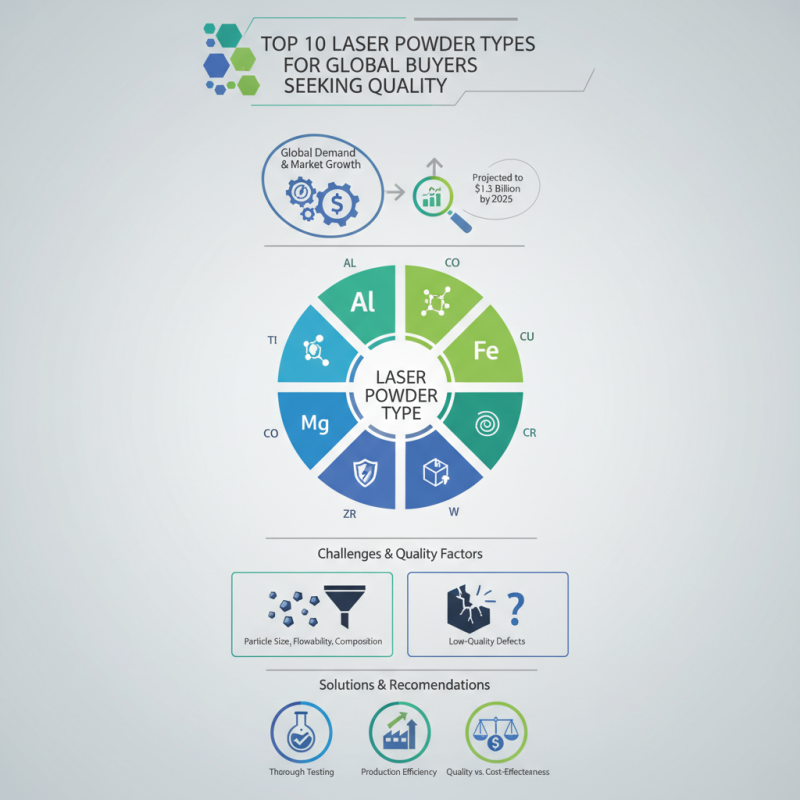
The demand for high-quality laser powder is surging globally. As industries adopt additive manufacturing, laser powders are crucial. According to a recent report by MarketsandMarkets, the global laser powder market is projected to reach $1.5 billion by 2025. This growth highlights the importance of selecting the right type of laser powder for specific applications.
Many manufacturers face challenges in sourcing high-quality materials. Factors like particle size, flowability, and composition are critical. Experts emphasize that not all laser powders are created equal. Low-quality powders can lead to defects in 3D-printed parts, affecting performance and durability.
As buyers navigate the diverse options, understanding their needs is essential. Industry leaders recommend thorough testing and quality checks. The right laser powder can enhance production efficiency and reduce waste. Ultimately, the focus should be on balancing quality with cost-effectiveness. The choices made today will shape tomorrow’s manufacturing landscape.
Overview of Laser Powder in Additive Manufacturing
Laser powder plays a crucial role in additive manufacturing. It serves as the primary material used in laser-based 3D printing processes. Different powder types yield various mechanical properties and surface finishes. Buyers should understand the key characteristics of laser powders to make informed choices.
Each laser powder type has unique specifications affecting performance. For example, stainless steel powders offer good strength and corrosion resistance. Conversely, aluminum powders are lighter but may lack strength. Users often report challenges with powder flow and particle size distribution. These factors can significantly impact the printing process.
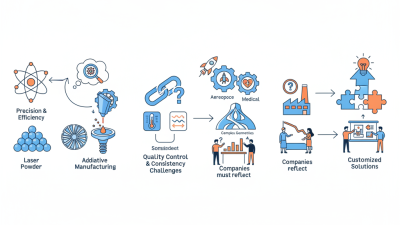
Quality control in laser powder production is essential. Inconsistent powder quality can lead to defects in finished products. Manufacturers must adopt stringent testing standards to ensure reliability. However, achieving uniformity in powder characteristics is often a complex task. Buyers should not overlook the importance of sourcing from reputable suppliers. This is vital for achieving desired outcomes in their projects.
Criteria for Selecting High-Quality Laser Powder
When selecting high-quality laser powders, buyers should consider crucial criteria. The particle size is one of the most significant factors. Smaller particles may enhance the density and surface finish of the final product. However, they can also lead to challenges like flowability. Balancing these factors can be complex.
Composition also plays a pivotal role. The right alloying elements can improve the mechanical properties of the printed parts. Each application might require a different mixture. Testing and refinement can be necessary to achieve the best results. It is essential to collaborate with experts during this phase.
Quality control is non-negotiable. Buyers should ensure that the suppliers have robust testing protocols. Consistency in properties like flow and melting point is crucial. Inconsistent quality can lead to defects in manufacturing. Analyzing certifications and production processes can help buyers make informed decisions.
Top 10 Laser Powder Types for Global Buyers Seeking Quality
| Laser Powder Type |
Material Composition |
Particle Size (μm) |
Density (g/cm³) |
Melting Point (°C) |
Typical Application |
| Stainless Steel Powder |
Fe, Cr, Ni |
20 - 60 |
7.93 |
1400 |
Manufacturing of pipes and fittings |
| Aluminum Powder |
Al |
10 - 50 |
2.70 |
660 |
Aerospace and automotive components |
| Titanium Powder |
Ti |
15 - 45 |
4.51 |
1668 |
Medical implants and aerospace parts |
| Cobalt Chrome Powder |
Co, Cr |
20 - 40 |
8.5 |
1495 |
Dental crowns and aerospace parts |
| Nickel Based Alloy Powder |
Ni, Cr, Mo |
15 - 35 |
8.4 |
1300 |
Gas turbines and power generation |
| Copper Powder |
Cu |
15 - 50 |
8.96 |
1085 |
Electrical components |
| Inconel Powder |
Ni, Cr, Fe |
20 - 45 |
8.19 |
1390 |
Aerospace, oil, and gas industries |
| Hastelloy Powder |
Ni, Mo, Cr |
15 - 30 |
8.90 |
1310 |
Chemical processing equipment |
| Tool Steel Powder |
Fe, C, Cr, Mo |
20 - 50 |
7.85 |
1450 |
Manufacture of cutting tools |
Top Laser Powder Types and Their Properties
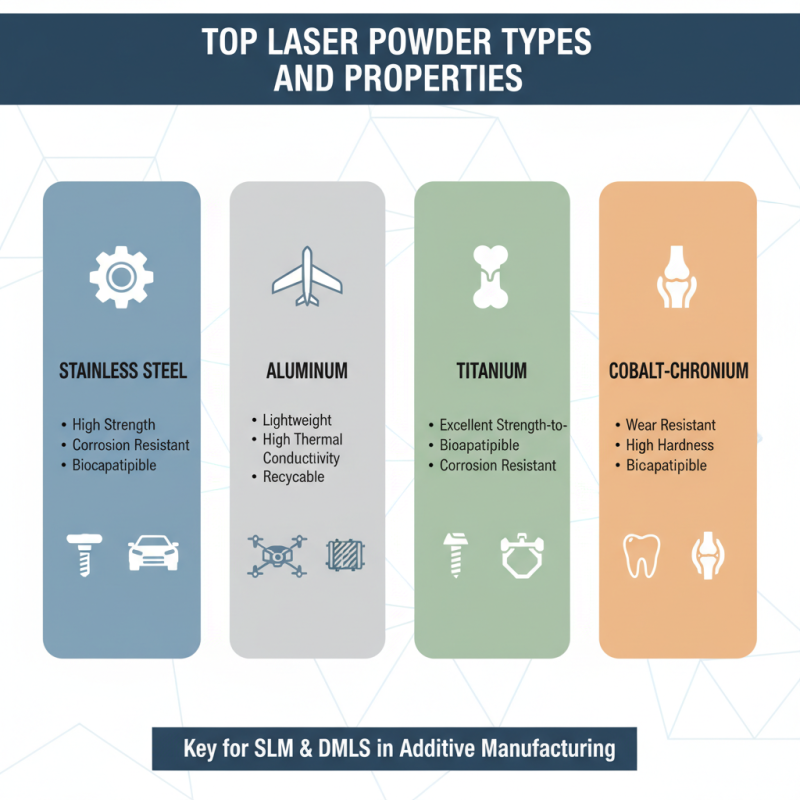
Laser powder plays a vital role in additive manufacturing, particularly in selective laser melting (SLM) and direct metal laser sintering (DMLS). The choice of powder impacts part quality and production efficiency. Common types include stainless steel, aluminum, titanium, and cobalt-chromium powders. Each type exhibits unique properties suited for specific applications.
Stainless steel powders, such as 316L, are known for their excellent corrosion resistance. They are often used in medical and industrial applications. A report from Market Research Future indicates that the demand for stainless steel powder is expected to grow annually by 6.5% from 2021 to 2028. On the other hand, titanium powders, like Ti-6Al-4V, demonstrate high strength-to-weight ratios. They are favored in aerospace and biomedical fields, where performance is critical.
Aluminum powders offer lightweight options for applications where reducing weight is crucial. However, they require careful handling due to their reactivity. Cobalt-chromium powders provide strength and wear resistance but may lead to higher production costs. Buyers must weigh the advantages of each powder type against their specific needs and budgets. Data suggests that material properties can greatly influence the final product's success in the market. Understanding these nuances is essential for informed decisions.
Applications of Different Laser Powder Materials
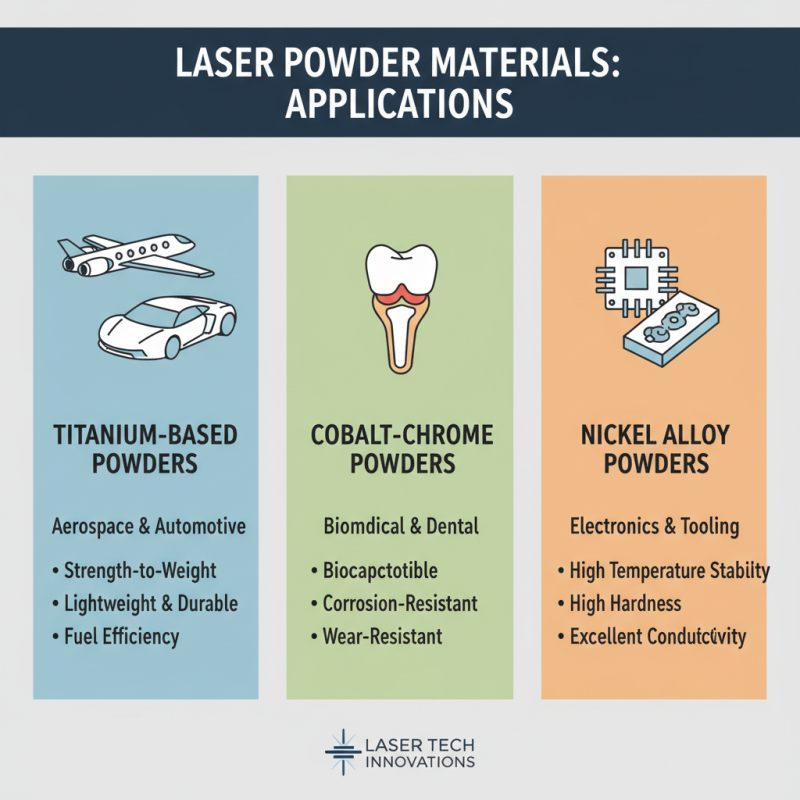
When it comes to laser powder materials, different types serve various applications across industries. For example, titanium-based powders are renowned for their strength-to-weight ratio. This makes them ideal for aerospace and automotive sectors. They are lightweight yet exceptionally durable, which can optimize fuel efficiency and performance.
Stainless steel powders, on the other hand, are commonly used in construction and medical applications. Their corrosion resistance and biocompatibility make them a popular choice for implants and structural components. However, quality can vary. It’s essential to source from reliable suppliers to ensure effectiveness.
Aluminum powders offer a unique blend of benefits. They are lightweight and provide excellent thermal conductivity. They find their niche in electronics and automotive industries. However, sourcing high-quality aluminum powder can be a challenge. Variability in particle size can affect the final product quality. Buyers must assess their needs carefully before making a decision.
Global Suppliers and Market Trends for Laser Powders
The market for laser powders is rapidly growing. Buyers around the globe seek high-quality materials for various applications. Understanding suppliers and market trends is vital. Many manufacturers are shifting towards eco-friendly processes. This trend influences choices and end products.
Suppliers are diversifying their offerings. They focus on high-performance alloys, particularly for the aerospace and medical sectors. With global demand rising, transparency in sourcing has become paramount. Buyers expect reliable information and commitment to standards. Yet, some suppliers still struggle to meet these expectations.
Investing in quality control systems is essential. This ensures consistency in product performance. However, not every supplier has the resources to maintain such standards. Developing long-term partnerships can help buyers navigate these challenges. In an evolving marketplace, collaboration is crucial for success.