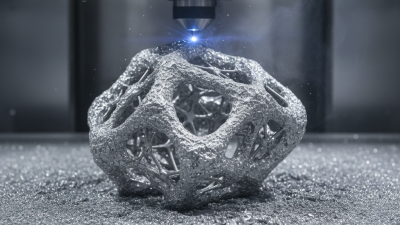
What is Gas Atomized Powder and Its Benefits for Buyers?
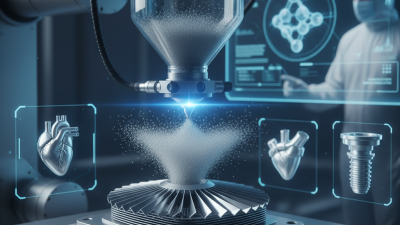
Gas Atomized Powder represents a significant advancement in powder metallurgy. This innovative powder is produced by rapidly cooling molten metal using high-pressure gas. According to a report by Smith Research Group, the global market for gas atomized powders is projected to reach $2.5 billion by 2025, highlighting its growing demand across various industries.
Industry expert Dr. Emily Chen, a leading metallurgist, emphasizes the advantages of this technology. She states, "Gas Atomized Powder offers superior particle uniformity and flowability, which are crucial for precision applications." The enhanced properties of gas atomized powders reduce defects in finished products. This reliability has made it a preferred choice for aerospace, automotive, and medical applications.
However, the production of gas atomized powders is not without challenges. The process requires significant investment in specialized equipment. Additionally, ensuring consistent quality can be complex. Buyers must weigh these factors carefully when considering gas atomized powders for their manufacturing needs.
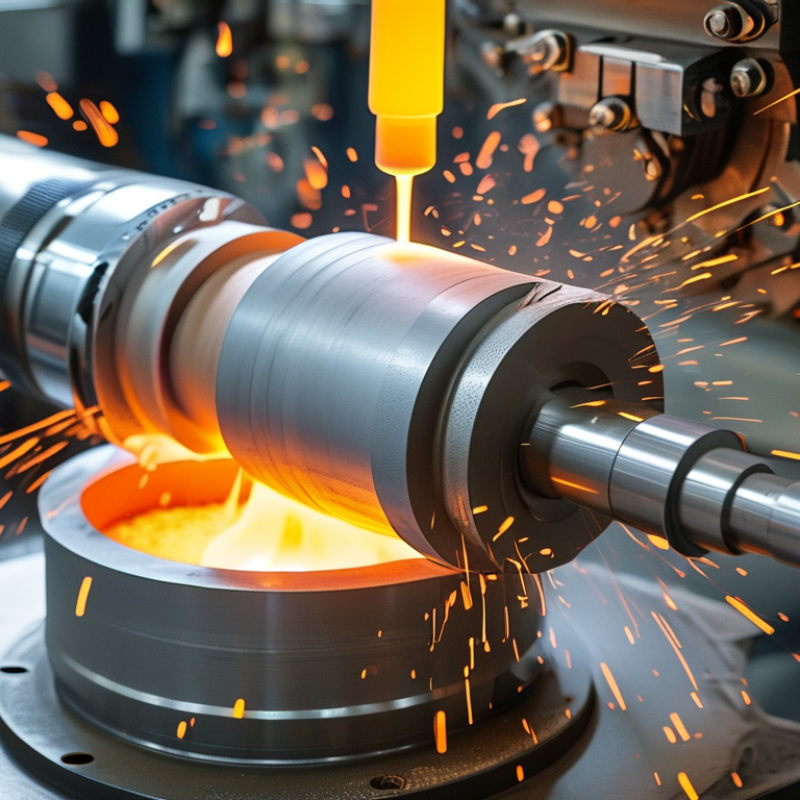
Understanding Gas Atomized Powder: A Comprehensive Overview
Gas atomized powder has gained significant attention in various industries, particularly in metal and alloy production. This method involves passing molten metal through high-pressure gas. The rapid cooling transforms the metal into fine powder. According to a report by Grand View Research, the global gas atomized powder market is projected to reach USD 5.64 billion by 2026, underlining its growing importance.
The benefits of gas atomized powders are numerous. They offer uniform particle size, which is crucial for applications in additive manufacturing. This consistency enhances flowability, making the powder easier to handle during production. A study by the Metal Powder Industries Federation states that the use of gas atomized powder can improve the mechanical properties of the final products. This results in stronger, more durable components that meet stringent industry standards.
**Tip:** When dealing with gas atomized powders, consider the specific particle size distribution needed for your application. Adjusting this can influence the final product’s performance.
Moreover, gas atomization allows for the production of complex geometries. However, the process can be costly due to the energy required. A review of industry practices indicates that manufacturers need to find a balance between quality and cost-effectiveness. Understanding the implications of this can lead to better resource management and potential cost savings.
**Tip:** Always evaluate the trade-offs between process efficiency and material quality when choosing gas atomized powders. This reflection can lead to more informed decisions in materials procurement.
The Process of Gas Atomization: How It Works and Its Applications
Gas atomization is a fascinating process used to create fine metal powders. This method involves melting metal and using high-pressure gas to atomize it into tiny droplets. These droplets solidify into powder as they cool. The process is highly effective for producing materials with consistent particle sizes, which is vital for various applications.
One notable advantage of gas atomized powder is its uniformity. Uniform powders lead to better flow characteristics, enhancing the efficiency in additive manufacturing and other applications. Additionally, the spherical shape of the particles improves packing density, which is crucial for high-performance components. However, achieving perfect uniformity can be challenging. Variations in temperature and gas pressure may result in slight inconsistencies.
Gas atomization finds applications in industries like aerospace and medical devices. These sectors demand materials with excellent mechanical properties and fine microstructures. However, not every gas atomization process yields the same quality powder. Buyers must consider the process parameters carefully. Understanding these factors ensures they receive high-quality materials suited to their specific needs.
Key Benefits of Gas Atomized Powder for Various Industries
Gas atomized powder has emerged as a vital material across various industries, particularly in advanced manufacturing. Its unique production process generates fine particles, resulting in superior flowability and packing density. According to a report by MarketsandMarkets, the global metal powder market is expected to reach $6.5 billion by 2026. This growth highlights the increasing demand for materials like gas atomized powder, which can significantly enhance product performance.
One key benefit for buyers is the improved mechanical properties of components made from gas atomized powder. These powders exhibit uniform particle size distribution, which promotes consistent sintering and optimal microstructure. A study from the Journal of Materials Science revealed that parts created from gas atomized powders showed up to 20% higher tensile strength compared to those made from traditional methods. This strength translates into more durable products, reducing the need for frequent replacements and maintenance.
Additionally, industries such as aerospace and automotive appreciate the versatility of gas atomized powders. These materials can be tailored to specific applications, allowing for innovations in design and functionality. However, the higher production costs associated with gas atomization can be a concern for some businesses. They must weigh the long-term benefits against initial investments. The industry recognizes that while gas atomized powders offer significant advantages, careful consideration of end-use applications is essential for maximizing value.
What is Gas Atomized Powder and Its Benefits for Buyers? - Key Benefits of Gas Atomized Powder for Various Industries
| Industry |
Benefit |
Application |
Powder Characteristics |
| Aerospace |
High purity |
Engine components |
Fine particle size |
| Automotive |
Cost-effective |
Structural parts |
Uniform particle distribution |
| Medical |
Biocompatibility |
Implants |
Spherical morphology |
| Electronics |
Enhanced conductivity |
Circuit boards |
High surface area |
| Tooling |
Improved wear resistance |
Cutting tools |
Toughened composition |
Comparative Analysis: Gas Atomized Powder vs. Traditional Powder Methods
Gas atomized powder production involves a high-energy process that transforms molten metal into fine particles. This method provides a uniformly sized powder, crucial for various applications. In contrast, traditional powder methods often suffer from irregular particle shapes and sizes. This lack of uniformity can lead to inconsistent performance in applications, such as additive manufacturing or powder metallurgy.
The efficiency of gas atomized powder is evident in its ability to enhance the mechanical properties of final products. Buyers benefit from improved flowability and packing density. Such features significantly improve the operational characteristics in processes like 3D printing. Traditional powders, on the other hand, may not offer these advantages due to their irregularities. However, it's essential to acknowledge that not all gas atomized powders are created equal. Some may exhibit variations in composition and particle morphology.
Choosing gas atomized powder can be a game-changer for manufacturers seeking quality and performance. It allows for better control over material characteristics. However, potential users must consider the supplier's expertise and the powder's specifications to ensure optimal results. Not every application suits gas atomized powder. Challenges in integrating this technology should not be overlooked, as buyers navigate the evolving landscape of materials.
Considerations for Buyers: Selecting the Right Gas Atomized Powder
Selecting the right gas atomized powder requires careful consideration of various factors. First, it's crucial to assess the powder's particle size distribution. Reports indicate that optimal particle sizes range between 1 to 100 micrometers for most applications. Choosing a size that suits your specific manufacturing process can make a significant difference in overall performance.
Density is another vital factor. High-density powders typically allow for better flow characteristics and packing efficiency. According to industry studies, powders with a density above 3.0 g/cm³ are preferable for many metal additive manufacturing processes. Buyers should also evaluate the purity level of the powder, as any contamination can severely impact the final product's quality.
Tips: Always request detailed specifications from suppliers. A reliable supplier should provide a material safety data sheet (MSDS) for the powders. Additionally, consider small-scale testing before committing to a larger order. This approach can reveal potential issues related to compatibility with your existing systems or processes. Remember, thorough testing can save you time and money in the long run.
Gas Atomized Powder Characteristics and Benefits
This chart illustrates key characteristics of gas atomized powder, highlighting the various benefits for buyers, including particle size, flowability, density, purity, and cost per kilogram. These factors are essential for selecting the right gas atomized powder for various applications.