2026 Best Stainless Steel Metal Powder for Your Projects?
In the pursuit of quality and versatility, Stainless Steel Metal Powder stands out in the industry. This material is essential for various applications, ranging from 3D printing to metal injection molding. Its unique properties offer durability and resistance to corrosion, which are critical for many projects.
Choosing the right Stainless Steel Metal Powder can be daunting. There are many grades available, each with distinct characteristics and applications. Understanding these differences is vital for achieving the best results. Often, users may overlook important factors, leading to unsatisfactory outcomes.
Investing time in research is key. Consider the project requirements carefully. Each choice should reflect the intended use and environment. With a thoughtful approach, you can harness the true potential of Stainless Steel Metal Powder for your creations.
Overview of Stainless Steel Metal Powders in 2026
As we look to 2026, the market for stainless steel metal powders is evolving. Demand is increasing. Applications range from aerospace to biomedical. This versatility drives innovation. According to a recent industry report, the global stainless steel powder market is projected to grow at a CAGR of 7.5% by 2026. This statistic speaks volumes about the landscape.
Stainless steel powders are essential in additive manufacturing. They enable the production of complex geometries. This technology enhances design possibilities. However, the challenge lies in consistency. Variability in particle size and distribution can affect the end product. A study indicated that deviations in powder characteristics led to a 20% increase in processing times for some applications. Addressing these inconsistencies is critical.
In addition, environmental impacts are a concern. The process to produce stainless steel powders often leaves a carbon footprint. Sustainability metrics are not always met. While other metals may offer advantages, stainless steel remains a leading choice. Industry experts advocate for developing greener methods. The need for improvement is evident but achievable. Adopting more sustainable practices can significantly benefit manufacturers and end-users alike.
2026 Best Stainless Steel Metal Powder for Your Projects
| Type of Metal Powder |
Average Particle Size (µm) |
Apparent Density (g/cm³) |
Composition (% Fe, % Ni, % Cr) |
Applications |
| 316L Stainless Steel |
15 - 45 |
3.1 |
Fe 62, Ni 12, Cr 18 |
Biomedical, Marine Applications |
| 304 Stainless Steel |
10 - 30 |
2.8 |
Fe 68, Ni 8, Cr 18 |
Construction, Automotive |
| 430 Stainless Steel |
20 - 50 |
3.3 |
Fe 86, Cr 14 |
Kitchenware, Automotive Trim |
| 17-4 PH Stainless Steel |
5 - 20 |
7.8 |
Fe 70, Ni 4, Cr 17, Cu 4 |
Aerospace, Defense |
| SUS630 Stainless Steel |
15 - 40 |
7.9 |
Fe 66, Cr 17, Ni 3, Mo 4 |
Industrial Equipment, Fasteners |
Key Properties and Benefits of Stainless Steel Metal Powders
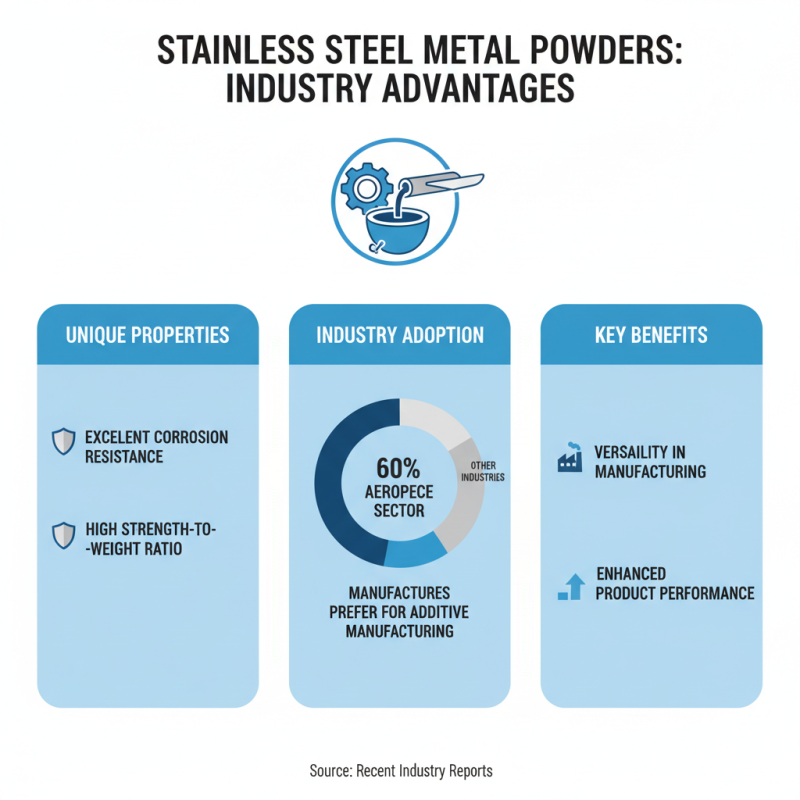
Stainless steel metal powders have gained popularity in various industries due to their unique properties. These powders are known for their excellent corrosion resistance and high strength-to-weight ratio. According to recent reports, over 60% of manufacturers in the aerospace sector prefer stainless steel powders for additive manufacturing due to these traits.
Another advantage is their thermal stability. Stainless steel metal powders maintain their integrity under high-temperature conditions. Their melting points often exceed 1400°C, making them suitable for demanding applications. However, the particle sizes can range significantly. Fine powders may offer better flowability, but coarse powders can enhance strength. Striking the right balance is crucial yet challenging.
Despite their advantages, there are concerns. Some manufacturers report issues with powder consistency. Variations in particle shape and size can lead to defects in final products. Additionally, the cost of stainless steel metal powders is higher than other materials, which can impact budgeting. Industry trends suggest that continuous improvements in processing methods may address these challenges.
Top Applications of Stainless Steel Metal Powders in Industry
Stainless steel metal powders play a crucial role in various industrial applications. The global market for these powders is projected to grow significantly. According to a recent market study, the demand for stainless steel powders is set to reach over $2 billion by 2025. This surge is mainly due to their use in additive manufacturing and powder metallurgy.
In the automotive sector, stainless steel powders are commonly used for making strong and lightweight parts. They offer high resistance to corrosion and wear, critical for vehicle longevity. A report from an engineering association indicates that using metal powders can reduce material waste by 30%. This efficiency, however, raises questions about the sustainability of sourcing raw materials and the environmental impact of production processes.
Another prominent application is in the medical field. Stainless steel powders are utilized for producing implants and surgical instruments. The biocompatibility of stainless steel makes it ideal for these applications, yet issues related to long-term biocompatibility need further exploration. Balancing performance with long-term health outcomes remains a challenge. As industries increasingly adopt these advanced materials, constant evaluation of their implications is essential.
2026 Best Stainless Steel Metal Powder Applications
Comparative Analysis of the Best Stainless Steel Metal Powders
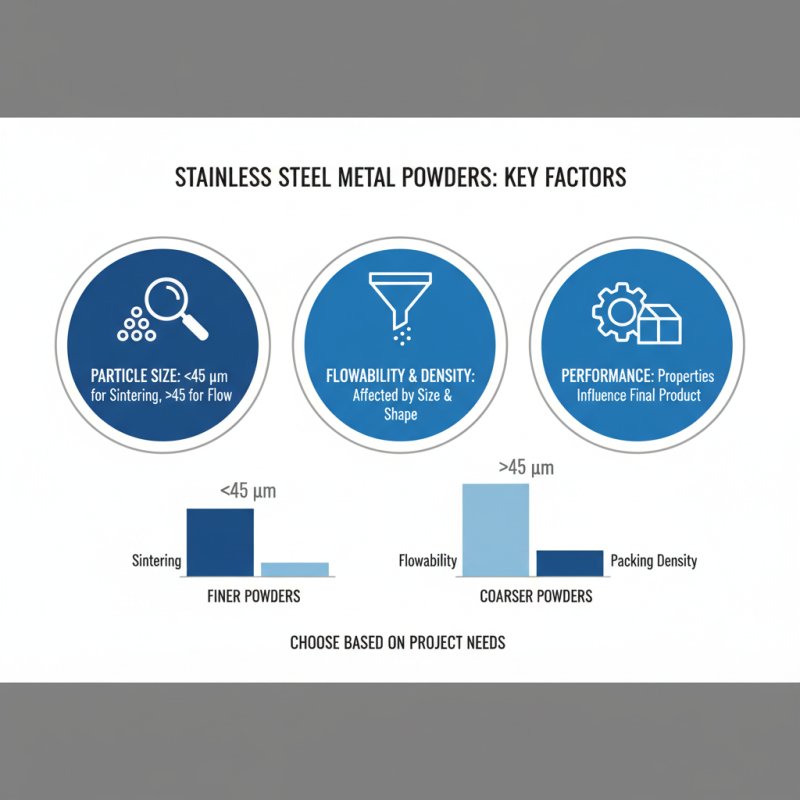
When choosing stainless steel metal powders for projects, several factors come into play. A comparative analysis reveals a variety of properties that can significantly affect performance. For instance, particle size and distribution are crucial for flowability and packing density. Reports suggest that finer powders, typically below 45 microns, offer better sintering properties but may pose handling challenges.
Additionally, elemental composition impacts the end results. Higher nickel content can enhance corrosion resistance. However, balancing cost and performance is essential. Some studies indicate that while alloyed powders improve strength, they may lead to higher production costs. The materials should also undergo thorough quality checks. Drying and processing methods can introduce inconsistencies, which require careful consideration during application.
Moreover, the selection process is often complicated by the project's specific needs. Not all powders perform well across varying conditions. The key may lie in embracing a trial-and-error approach. Ensuring optimized parameters in manufacturing such as temperature and pressure significantly influences final product quality. Thus, stakeholders must weigh both the benefits and potential drawbacks in their decisions.
Factors to Consider When Selecting Stainless Steel Metal Powder for Projects
When selecting stainless steel metal powder for your projects, there are several factors to consider.
The particle size is crucial.
Smaller particles can improve flowability, while larger particles might offer strength.
Different applications require specific sizes. Pay attention to the distribution of powder sizes too.
A uniform distribution can enhance your final product’s quality.
The shape of the particles also plays a significant role.
Spherical powders generally provide better packing density.
Irregular shapes can lead to irregularities in your projects.
Think about how the shape will affect the sintering process.
Additionally, the alloy composition can alter properties significantly. Different stainless steel grades have unique characteristics, which may impact corrosion resistance and mechanical strength.
Cost is always a consideration.
Cheaper powders might save money upfront but could lead to performance issues later.
Evaluate if the lower cost is worth potential compromises.
Evaluate your specific needs carefully; trial runs can be helpful but might not always be feasible.
Analyzing your requirements can prevent mistakes in material choices.
Remember, every decision in this process can affect the outcome of your projects.